We Tested the Anatomy Claude Code Skill on Five Everyday Objects and Seven AI Models
On Saturday a developer called R (@wheresryan22) released Anatomy, a Claude Code skill. It takes a one-line idea and builds it as a small interactive machine you can turn, poke and take apart. The launch post has passed 1.3 million views and the repo has 4,000 stars. The replies are full of people one-shotting rockets, espresso machines, a Jacquard loom and ATP synthase.
Almost all of them used Opus 5.5. We wanted to know three things:
- What is it like on everyday things, rather than rockets?
- What does the skill add over just asking for an isometric drawing?
- Does it only work with Claude?
Five everyday objects, as interactive diagrams
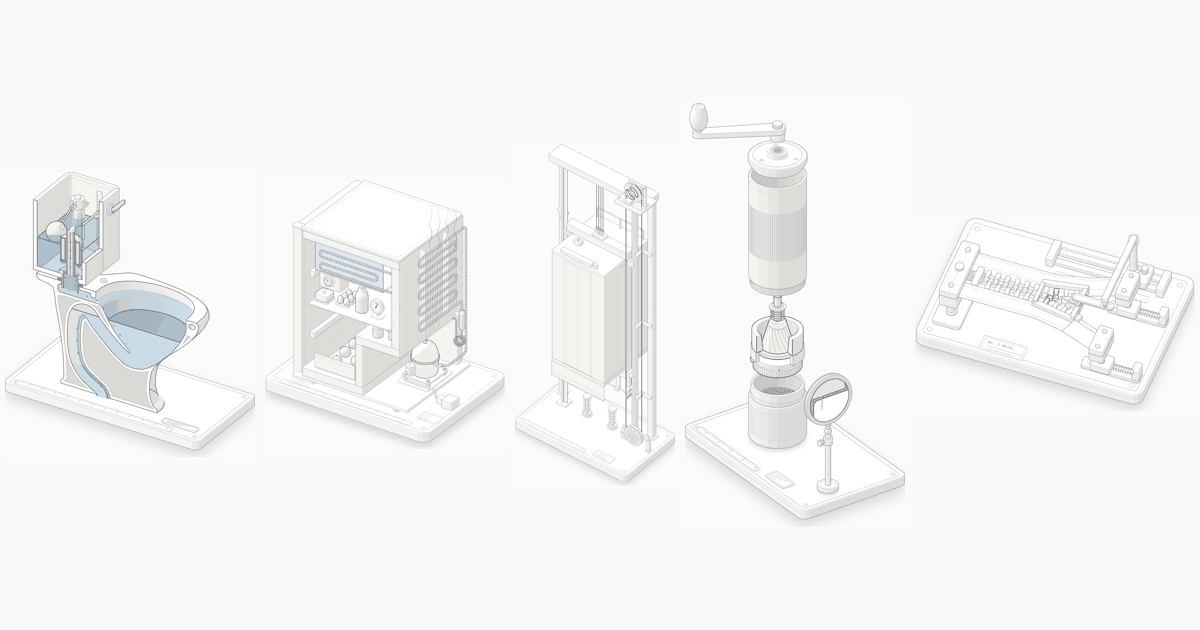
We asked Opus 5.5 to explain five objects most people use without knowing how they work. Each got a one-line brief and the skill's smallest size ("Figure").
How does a toilet flush? (34 min)
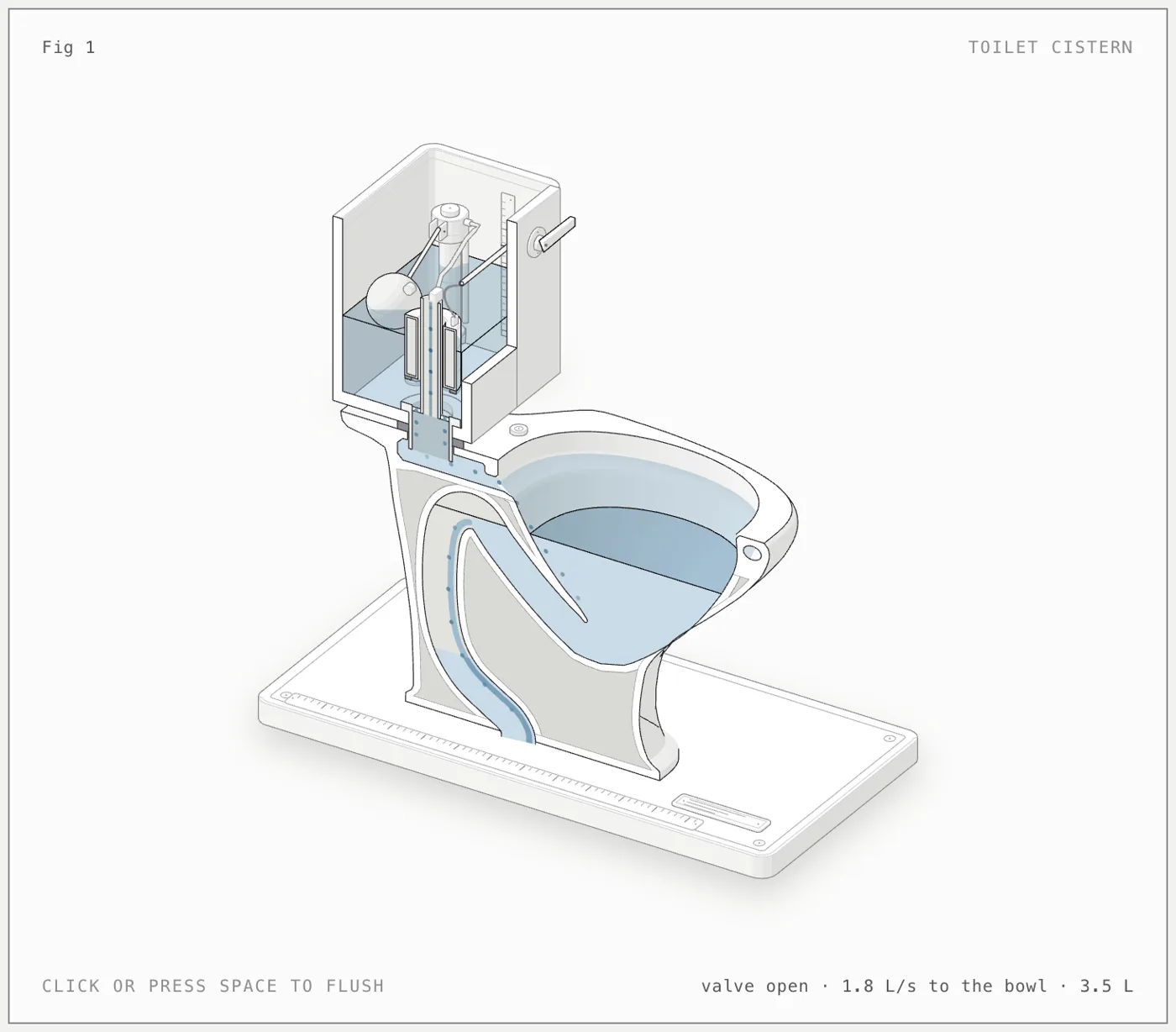
This is a cutaway of the cistern and bowl. Click to flush and watch the sequence:
- The flush valve lifts and water drops into the bowl.
- The S-bend fills until the siphon pulls everything down the trap. The readout follows the water ("siphon · 2.8 L/s down the trap").
- The float drops, and the fill valve tops the cistern back up until the float closes it.
How does a fridge work? (37 min)
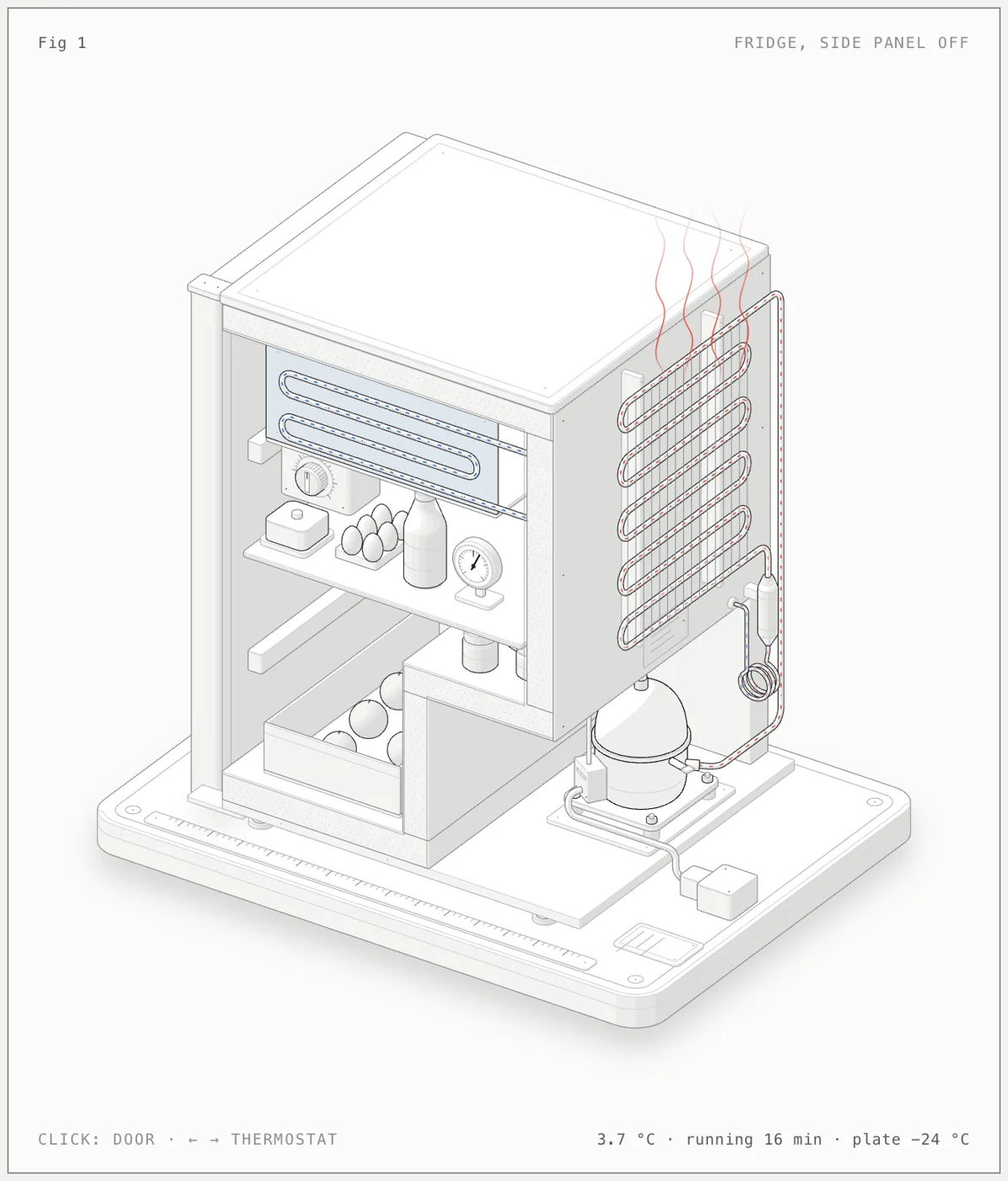
The fridge has its side panel off, and you can see what each part does:
- food on the shelves, with a cold plate at the back
- the coils on the back, giving off heat you can see rising
- the compressor underneath
Click to open the door, and use the arrow keys to turn the thermostat. The readout shows the inside temperature, how long the compressor has been running and the plate temperature. It's the clearest answer we've seen to "why is the back of my fridge warm?"
What keeps a lift (elevator) from falling? (28 min)
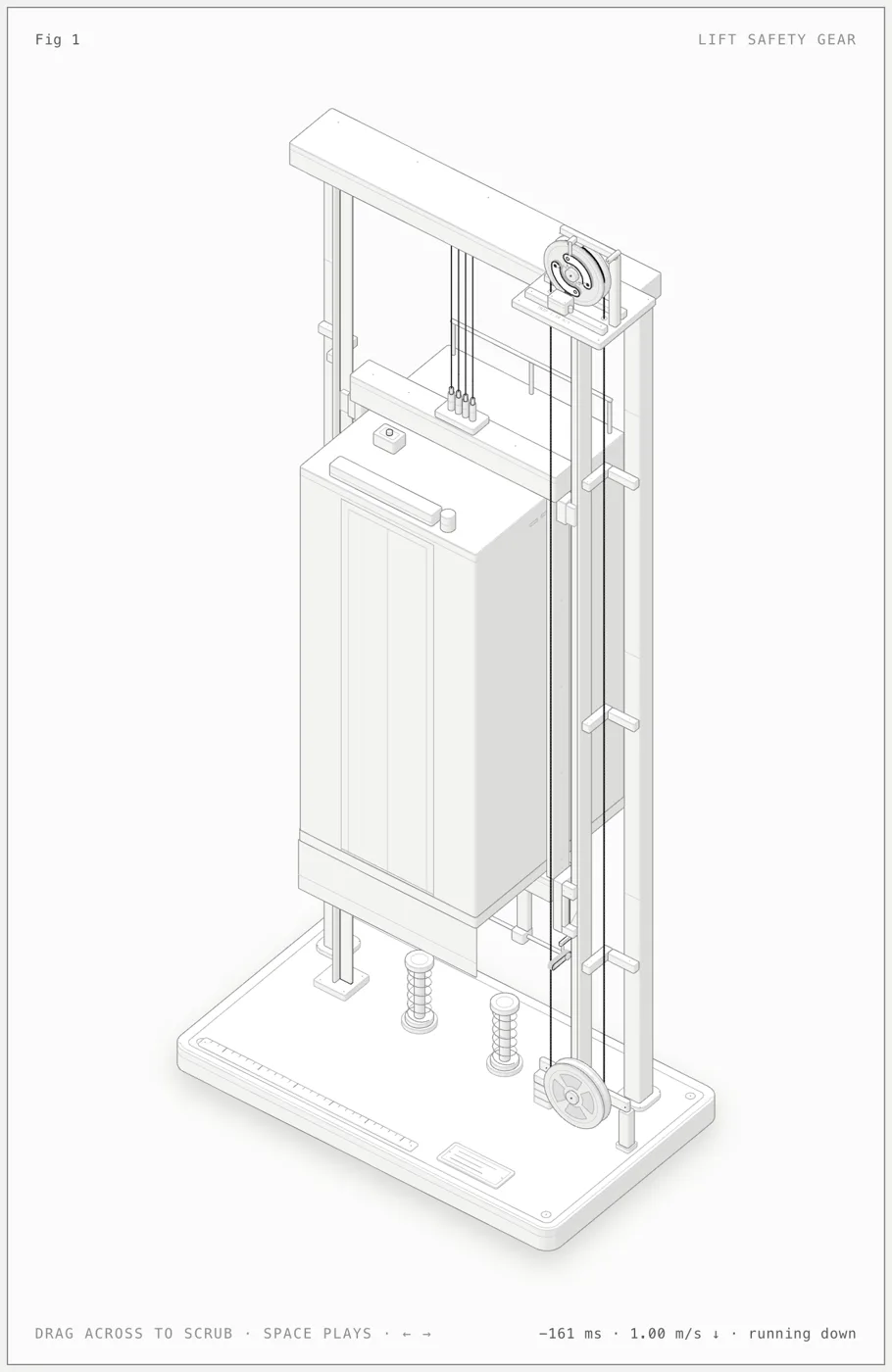
The full lift shaft is drawn: the car on its guide rails, a speed governor at the top, a tension pulley in the pit and buffers below. Drag across to scrub through the moment the ropes part. Within a few hundredths of a second the governor trips, a lever on the car lifts the wedges, and the car brakes against its rails until the readout says "held on the rails". The wedges are tiny at this size, so it's the car slowing and the readout that tell the story. Space is meant to play it too, but the figure's idle tour cuts in before the catch, so drag instead.
How does a zip (zipper) work? (22 min)
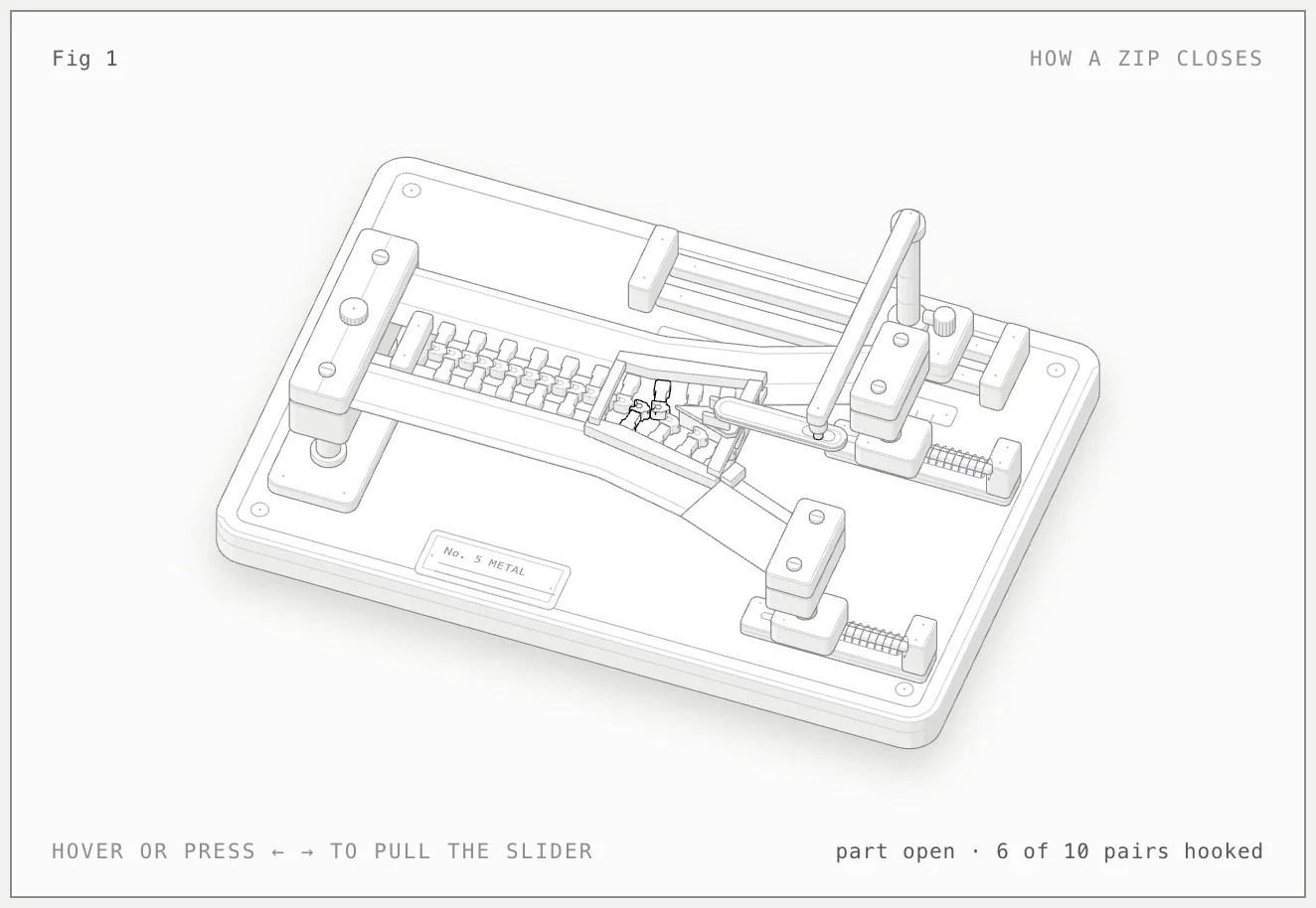
A No. 5 metal zip is clamped in a jig. Pull the slider and its Y-shaped channel tips each tooth's hook into the hollow of the one beside it. Pull back and a wedge prises them apart. The caption explains why you can't zip it by pushing the two rows together by hand. This is the weakest of the five at a glance, because the zip is small inside the jig.
How does a hand coffee grinder work? (24 min)
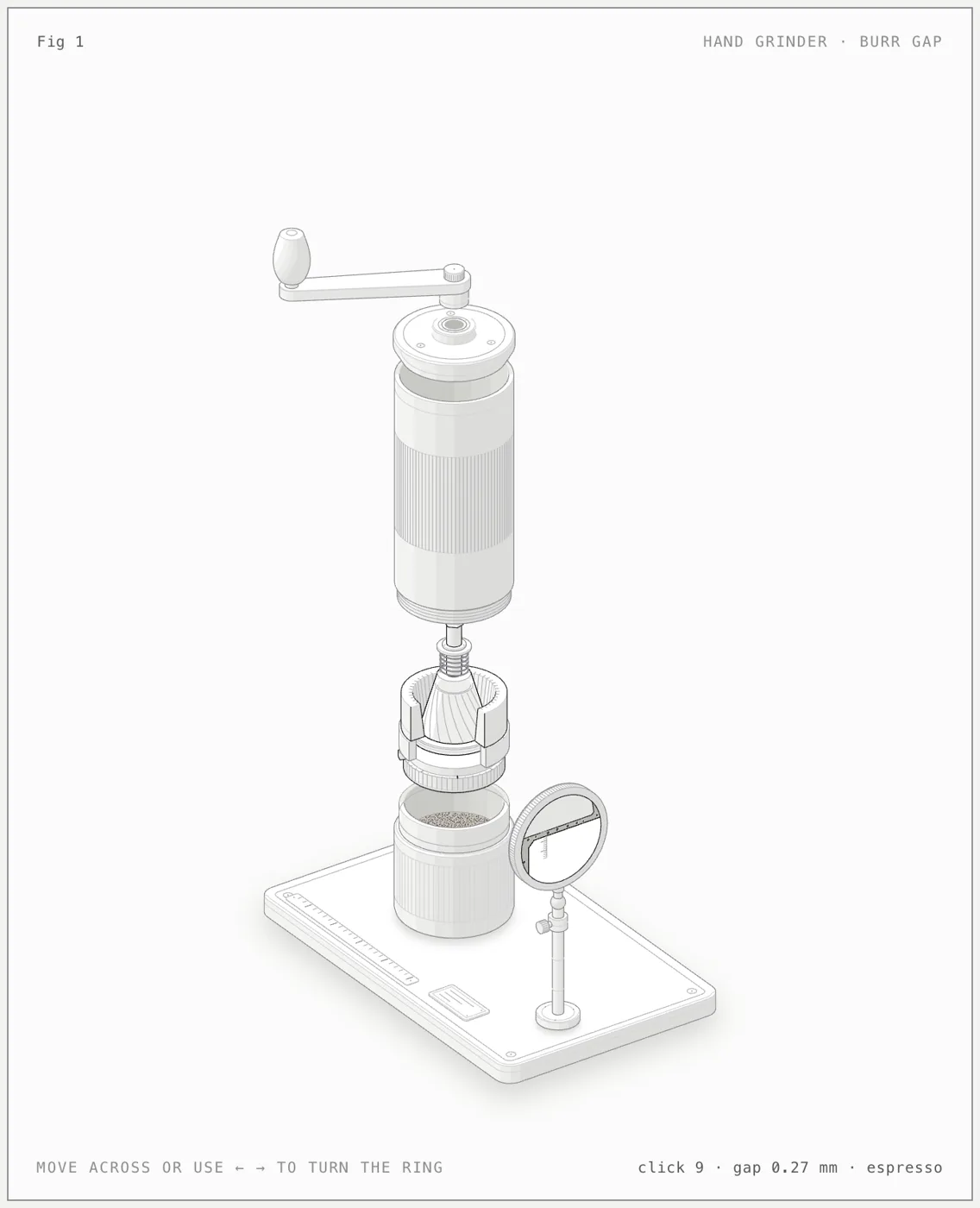
We gave this one a product-page brief instead of an explainer. The grinder hangs in exploded view, with a magnifier on a stand pointed at the burr gap:
- crank
- body
- conical burrs
- adjustment ring
- catch cup
Turn the ring and it clicks through the settings, from the zero point through espresso (0.27 mm) to cold brew at 1.2 mm. It's easy to picture this on a shop's product page in place of a static photo.
Bonus: how a product feed gets into Google Shopping
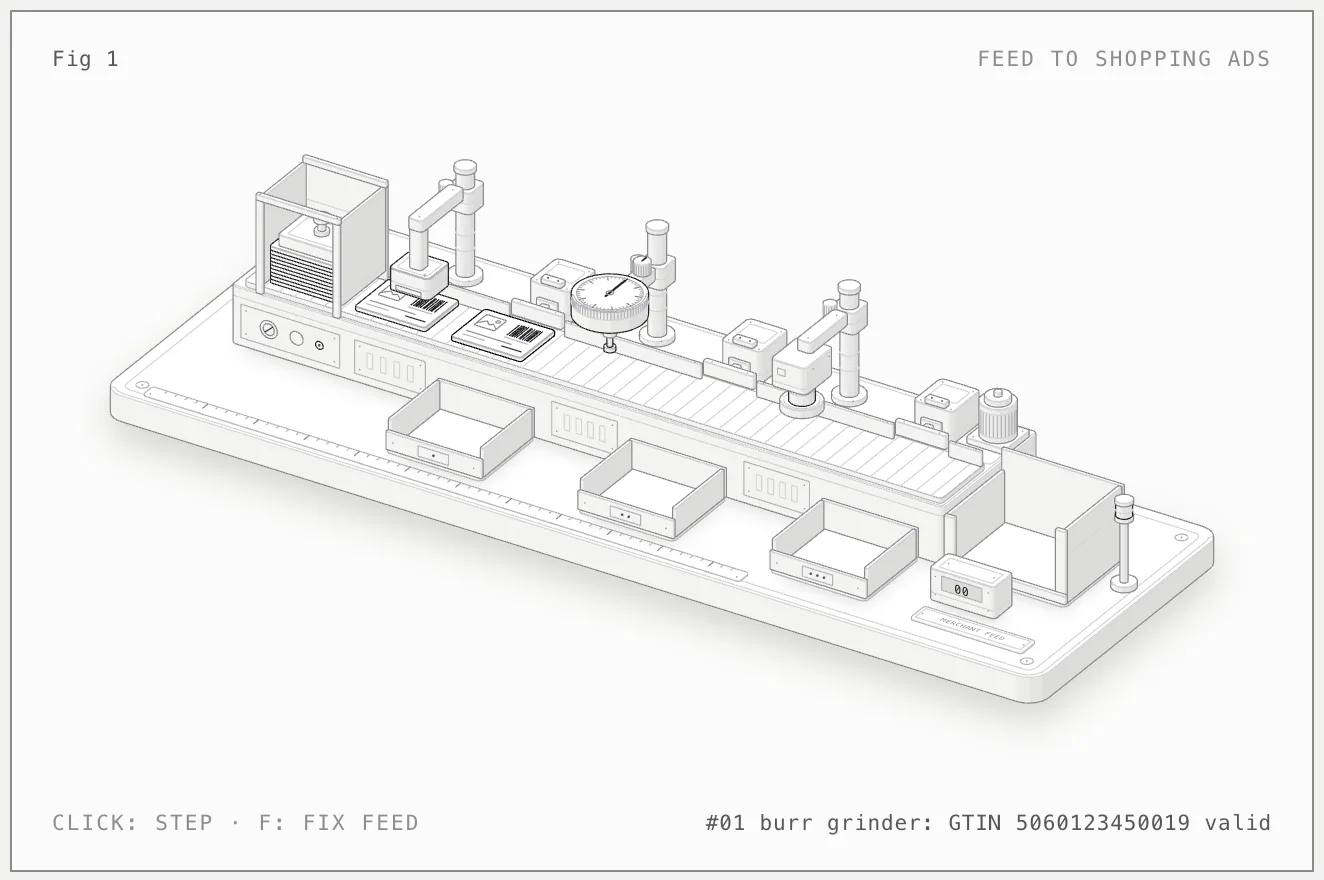
For something closer to our own work, we asked for a product feed going into Google Shopping. Products ride a conveyor past three checks:
- a barcode reader that checks the GTIN's check digit
- a price comparator that sets the feed price against the price on the product page
- a camera that rejects small images and images with promotional text
Disapproved items drop into bins and the rest end up as live ads. Press F to run the corrected feed. The checks match how Merchant Center disapproves items, though the real list is much longer.
Anatomy skill vs a plain prompt
As a control, we turned the skill off and asked Opus 5.5 for "an interactive isometric illustration" of how an LLM picks its next word. It took 3 minutes and made a colourful 3D bar chart: a tower per candidate word, with temperature and top-p controls. With the skill, the same model spent about half an hour building a machine instead: a gantry that draws from a row of blocks sized by probability.
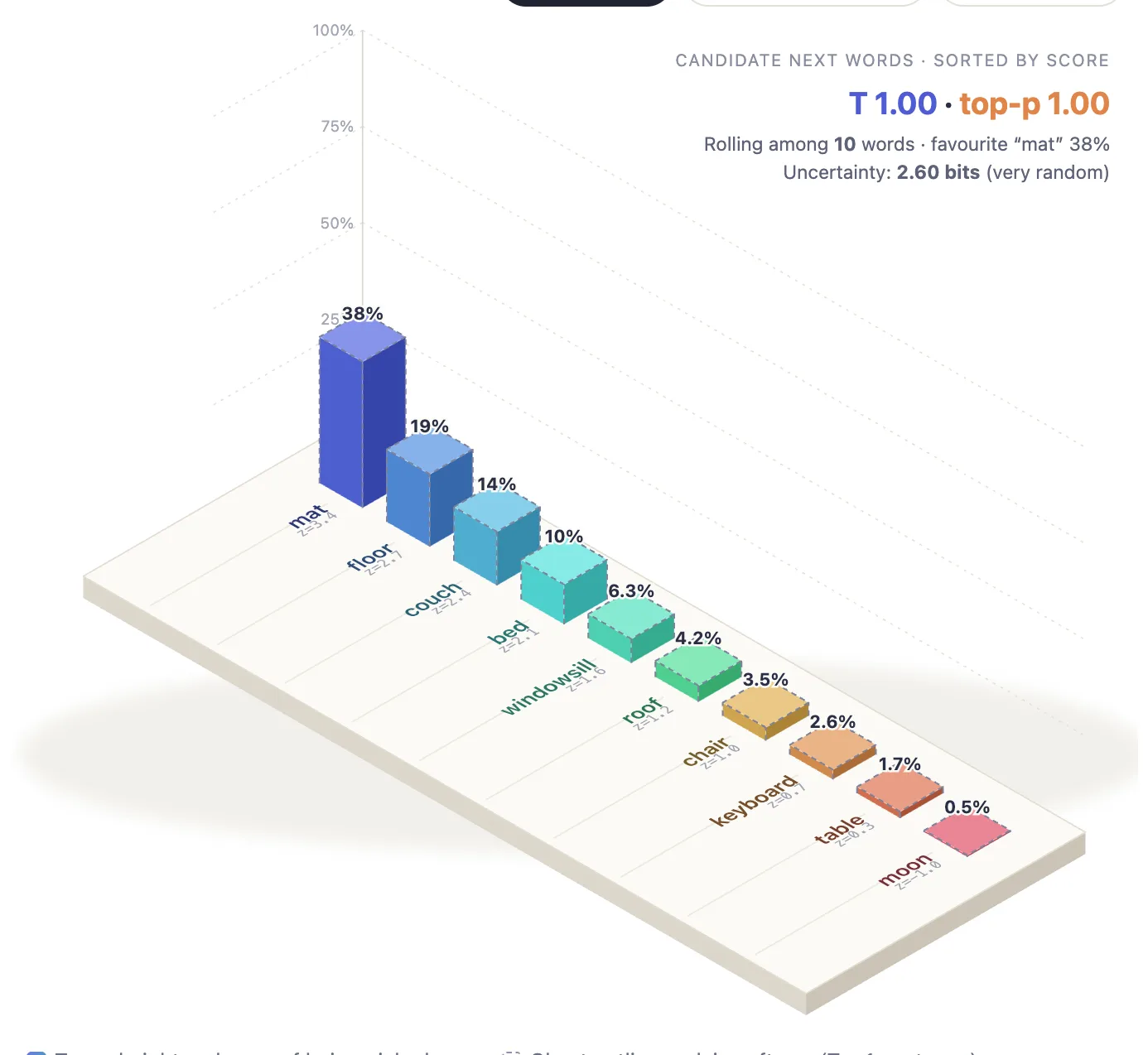
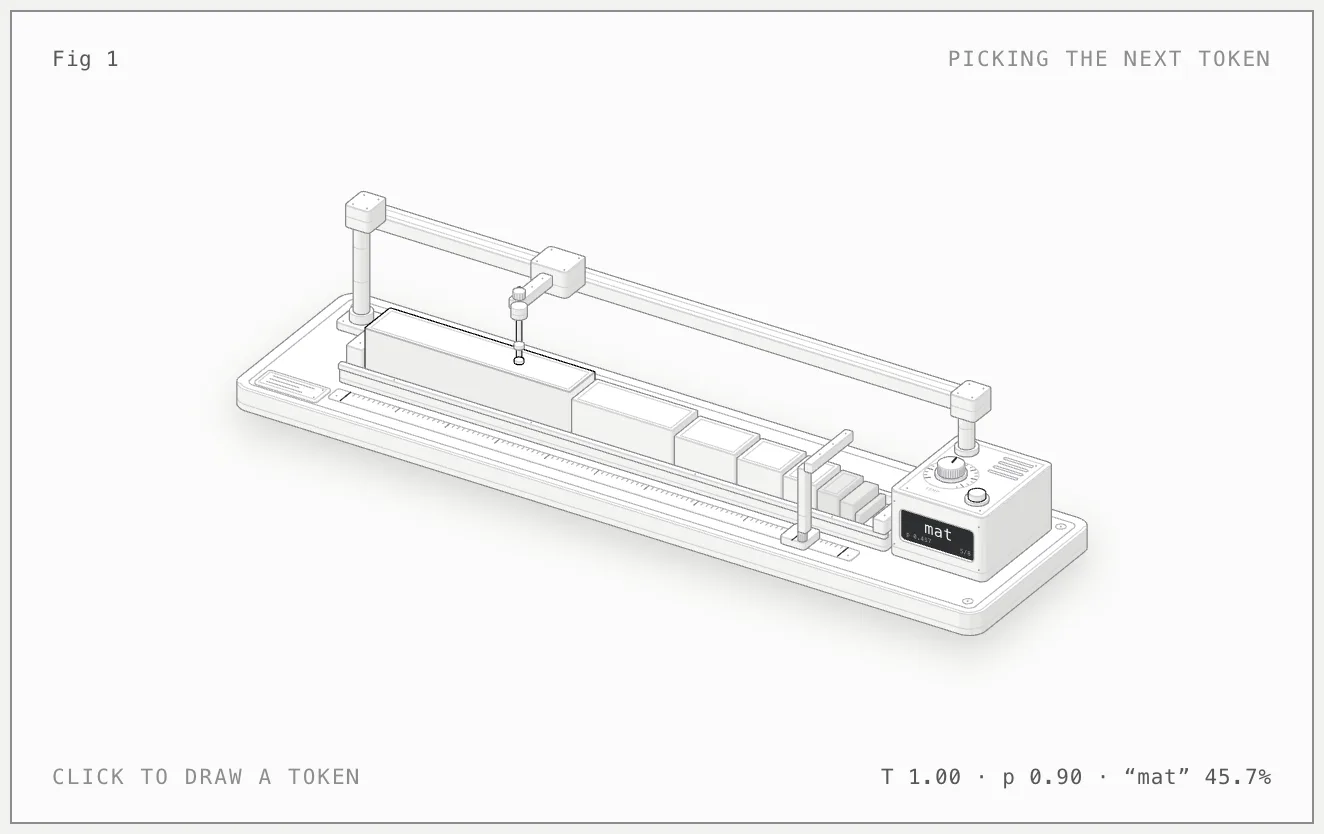
The skill's own rules call charts and labelled boxes "too abstract" and ask for a machine you'd recognise. On a physical object like the toilet, that's exactly right. On an abstract idea like this one, we found the bar chart easier to read, because the machine needs its caption to make sense.
Does Anatomy work with GPT, Gemini, Kimi and Grok?
The README says Anatomy also runs in Codex and OpenCode. So we gave the next-word request to seven models, each in its own agent:
- Opus 5.5, Fable 5.1 and Haiku 5.5 in Claude Code
- GPT-6.1 Sol in Codex
- Gemini 3.8 Flash, Kimi K3 and Grok 4.7 in OpenCode
All seven finished a working figure with no page errors.
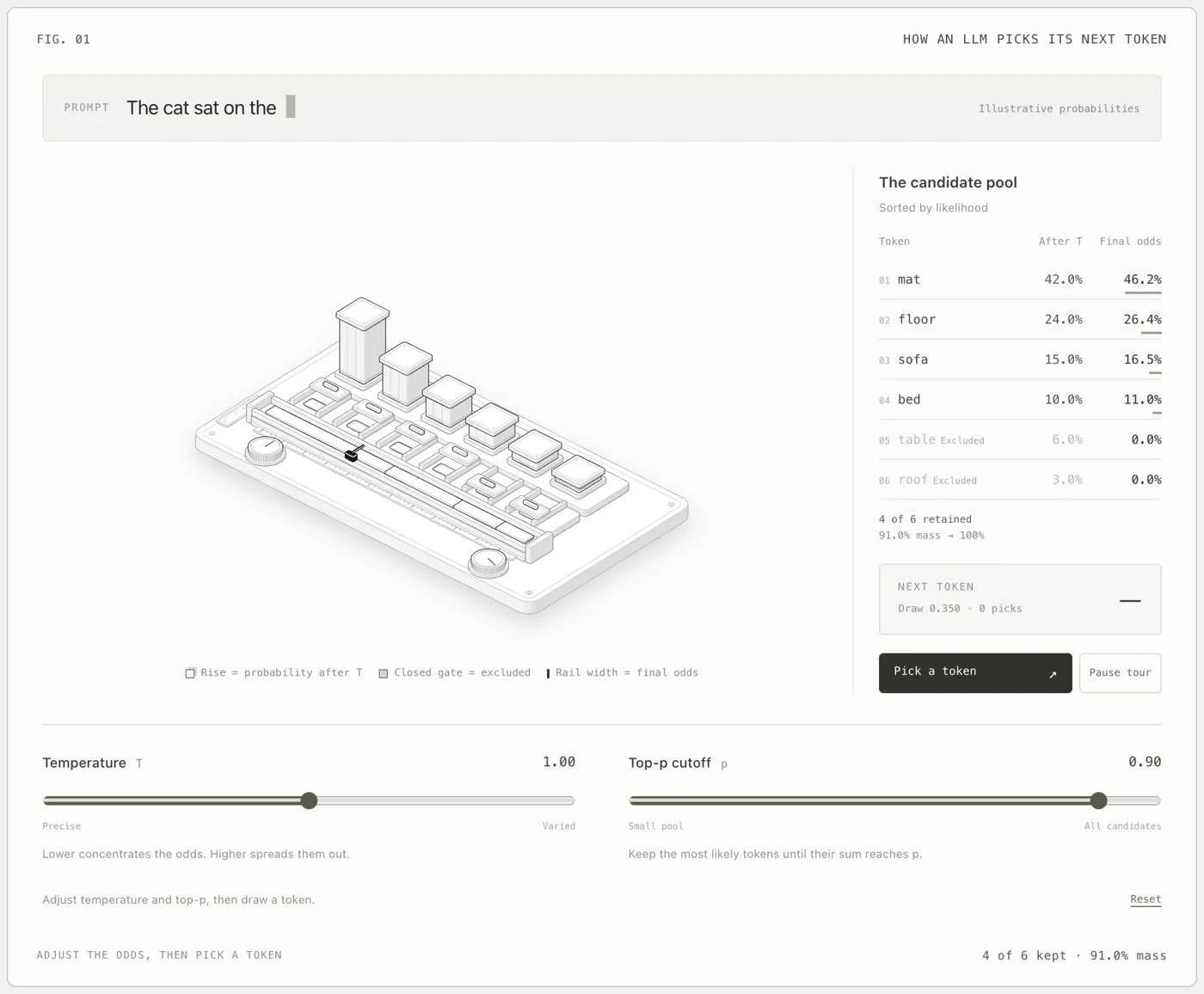
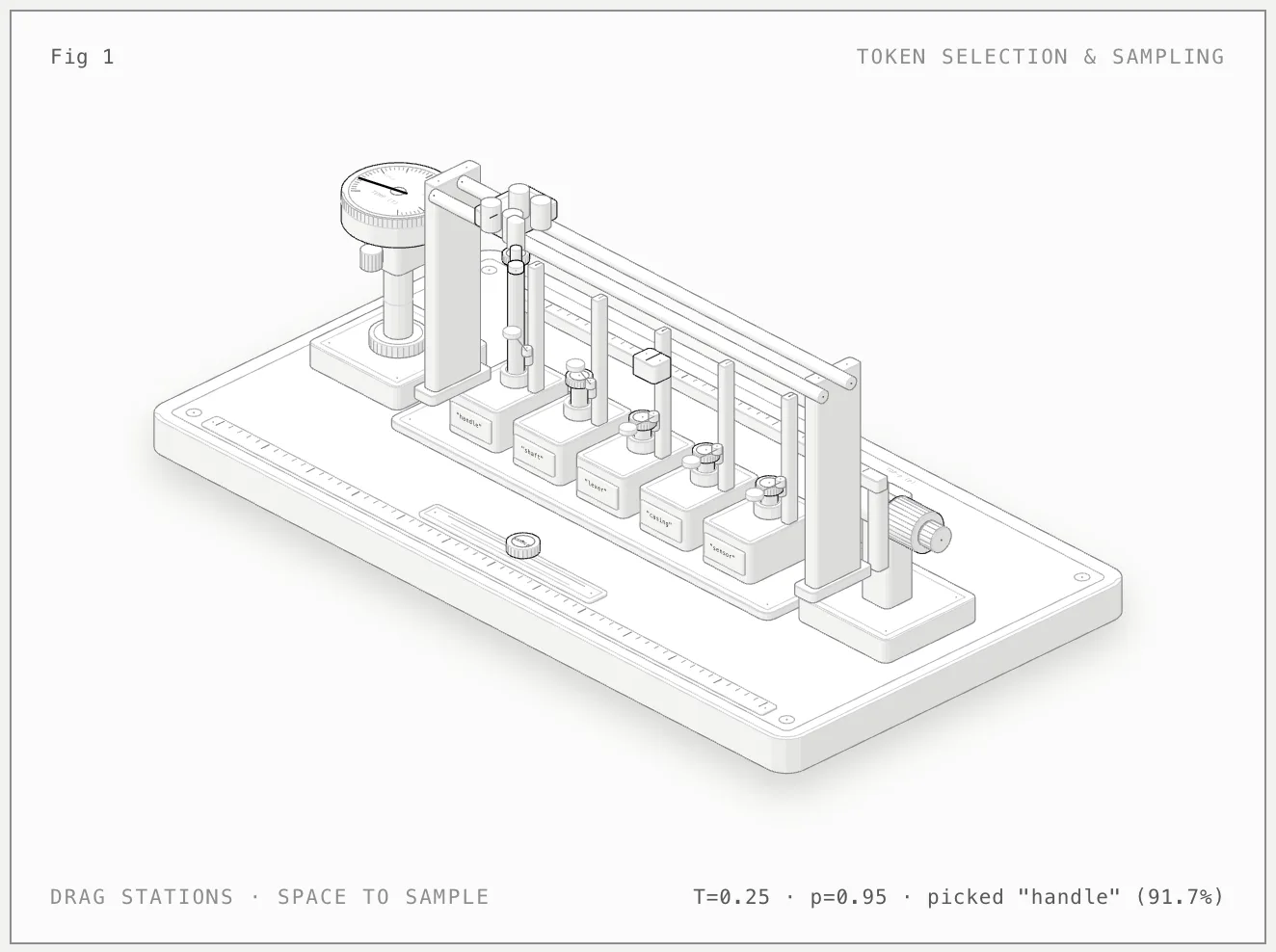
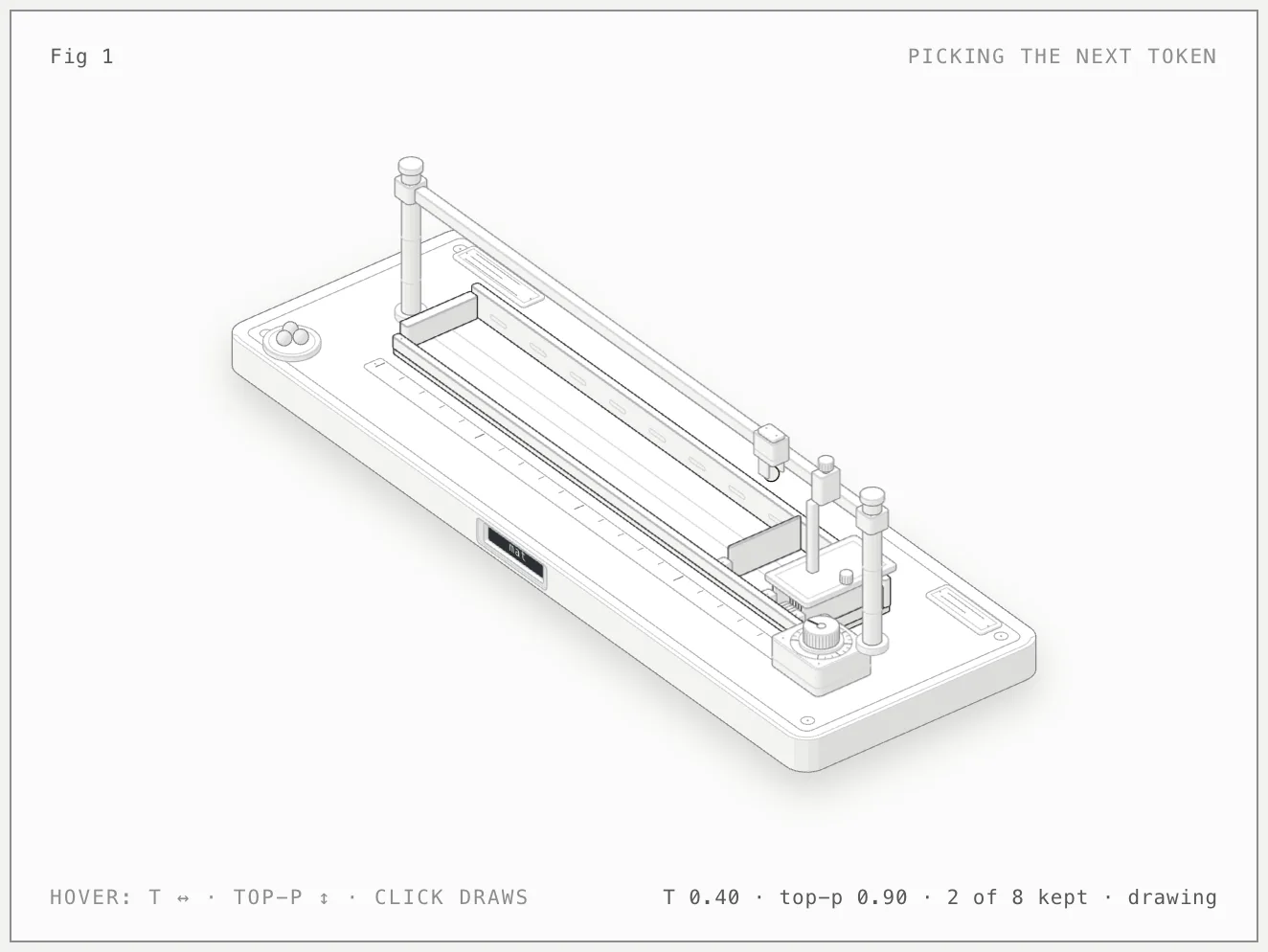
- GPT-6.1 Sol broke furthest from the house style. It added a prompt box, a table of odds before and after the cut-off, and real sliders. It's the most explanatory figure, and the least like an Anatomy one.
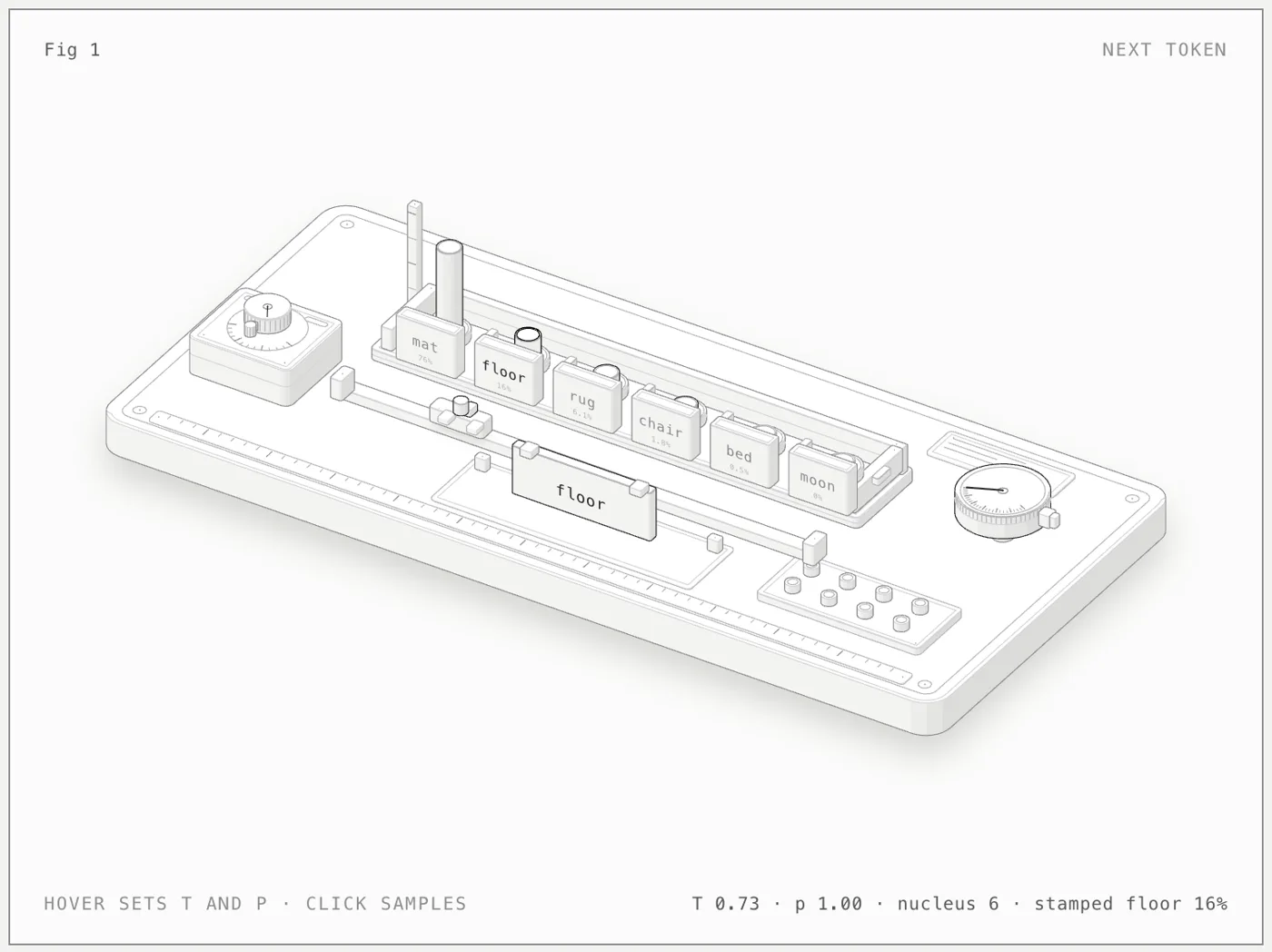
- Grok 4.7 printed the words on the keys of its machine, which makes it the easiest to read at a glance.
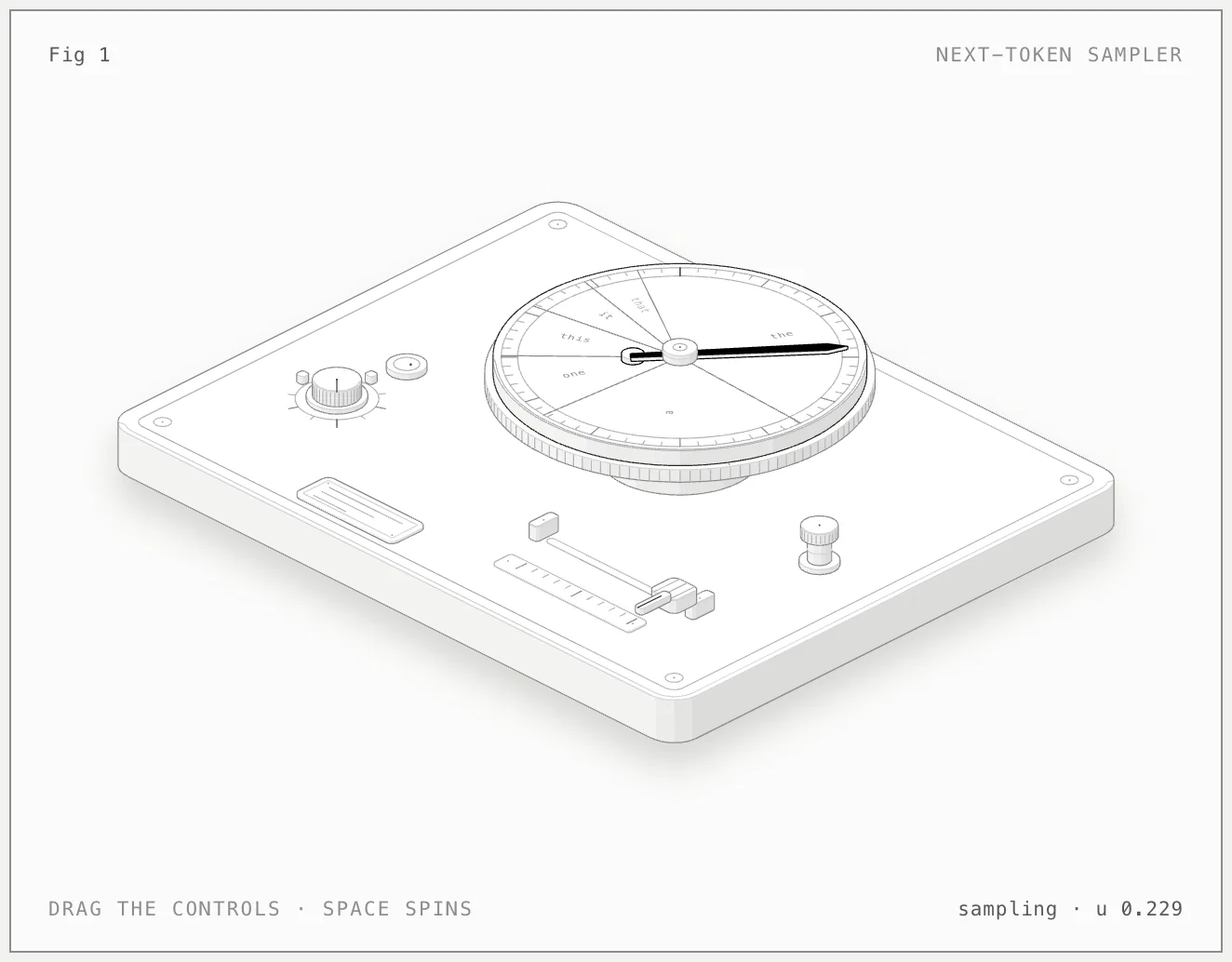
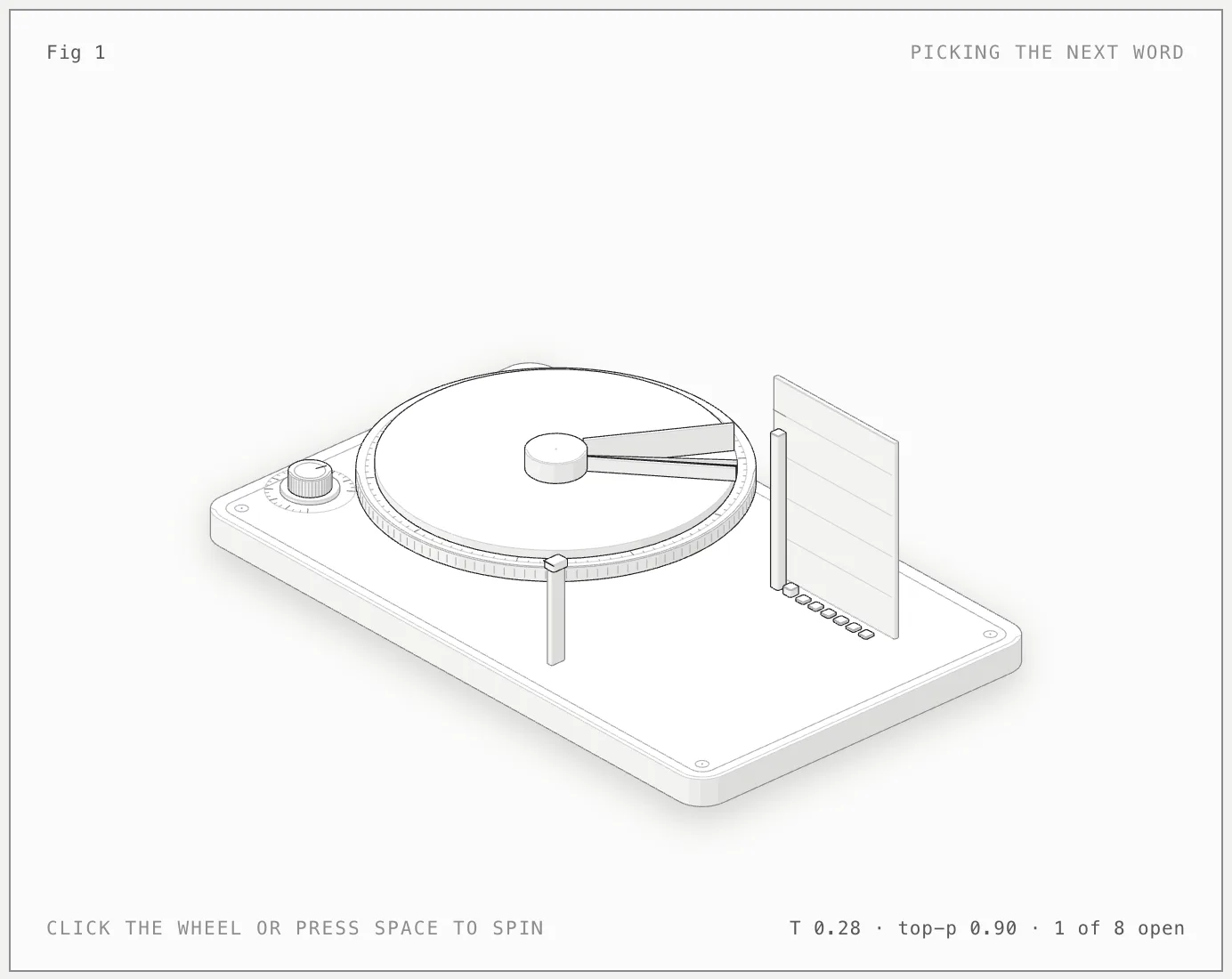
- Haiku 5.5 and Kimi K3 both built a roulette wheel, where each pocket's width is a word's chance. That's the best metaphor of the lot. Kimi labelled its pockets; Haiku didn't.
- Gemini 3.8 Flash built the densest rig, around the sentence "The robot gripped the…".
- Opus 5.5 and Fable 5.1 made clean, fairly sparse gantries.
The bigger finding is how alike they look. Every one is a white instrument on a base plate with a ruler and a dial gauge. The skill sets the style far more than the model does. That's good news if you want one consistent look across a set of figures.
Tips before you install the Anatomy skill
- It's slow. Each figure took 22 to 37 minutes. Much of that is the skill screenshotting and zooming into its own work to check it.
- Concrete beats abstract. Our techy subjects (next-word sampling, prompt caching) came out as neat boxes that need a caption. The physical objects explain themselves.
- Check the numbers. Each readout is driven by the same small model that moves the parts, so it's consistent. But the model wrote that model, so check the facts before you put a figure in front of customers.
- It runs outside Claude. Install it with
npx skills add wheresryan22/anatomy, adding-a codexor-a opencodefor those agents.
Method
- The brief. Every run got the same ending: interactive, light theme, the skill's "Figure" size, and work without asking questions.
- The agents. Claude Code 2.1.285, Codex 0.159.2 (GPT-6.1 Sol at its configured ultra reasoning) and OpenCode 1.18.33.
- The interruption. We stopped the seven-model runs about 25 minutes in by mistake and resumed each from its own session. So we don't report their build times.
- The checks. We opened every figure, clicked through it and screenshotted it before writing about it.
- More. More small model tests live in our playground, and the overall rankings are on the leaderboard.
Quick answers
What is the Anatomy skill?
An open-source agent skill by @wheresryan22, released on 10 October 2026. It has Claude Code (or Codex or OpenCode) explain an idea by building it as an interactive isometric machine in SVG, with optional WebGL and 3D. It ships with a drawing kit, eight worked examples and scripts that screenshot and check the figure.
Does the Anatomy skill work with models other than Claude?
Yes. On 12 October 2026, GPT-6.1 Sol in Codex, and Gemini 3.8 Flash, Kimi K3 and Grok 4.7 in OpenCode, all finished a working figure from the same prompt. They all came out in the same white bench-instrument style, because the skill decides the look more than the model does.
How long does an Anatomy figure take?
Our five everyday-object figures took Opus 5.5 between 22 and 37 minutes each, including the skill's own screenshot checks. Without the skill, Opus 5.5 answered a similar request in 3 minutes.
How does a toilet flush?
Pressing the handle lifts the flush valve in the cistern, and the water rushes into the bowl. That fills the S-shaped trap until it starts a siphon, which pulls the bowl's contents down the drain. As the cistern empties, the float drops and opens the fill valve, which refills the cistern until the rising float shuts it off again.
What stops a lift from falling if the cable snaps?
Lifts hang from several steel ropes, any one of which can hold the car. If the car still goes too fast, a speed governor trips. The governor is a pulley at the top of the shaft, linked to the car by its own rope. The trip pulls up the safety gear on the car, which wedges against the guide rails and brings the car to a stop.
Model pages: Claude Opus 5.5 · Claude Fable 5.1 · Claude Haiku 5.5 · GPT-6.1 Sol · Gemini 3.8 Flash · Kimi K3 · Grok 4.7