Inkling 2 Mini review: a laptop-sized open model that isn't ready for business work
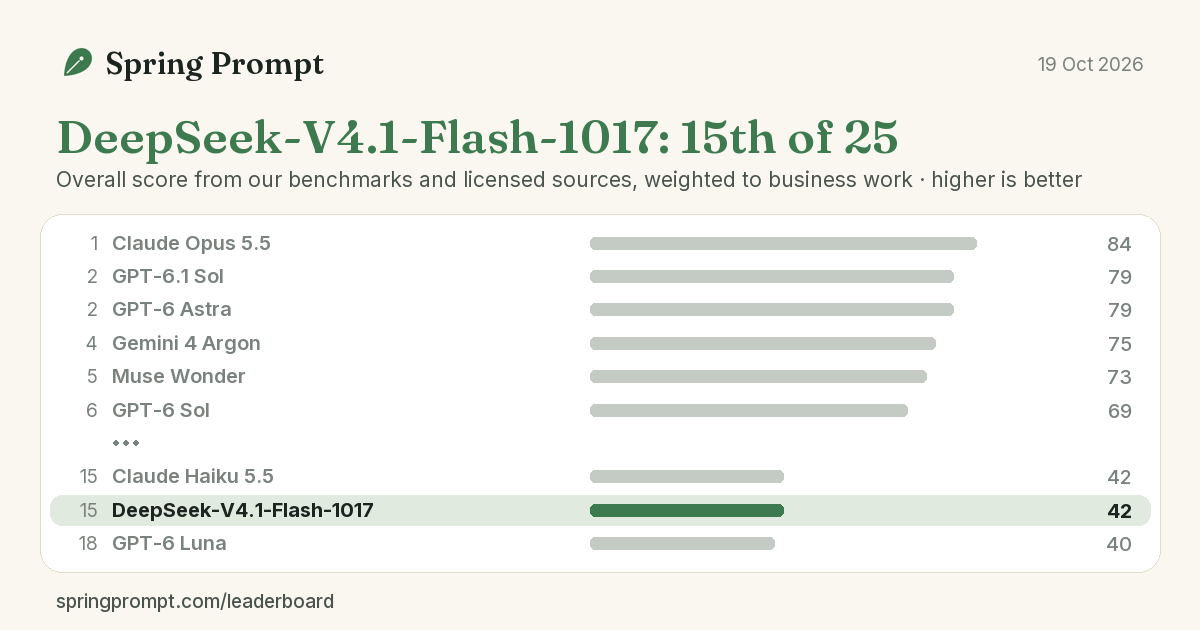
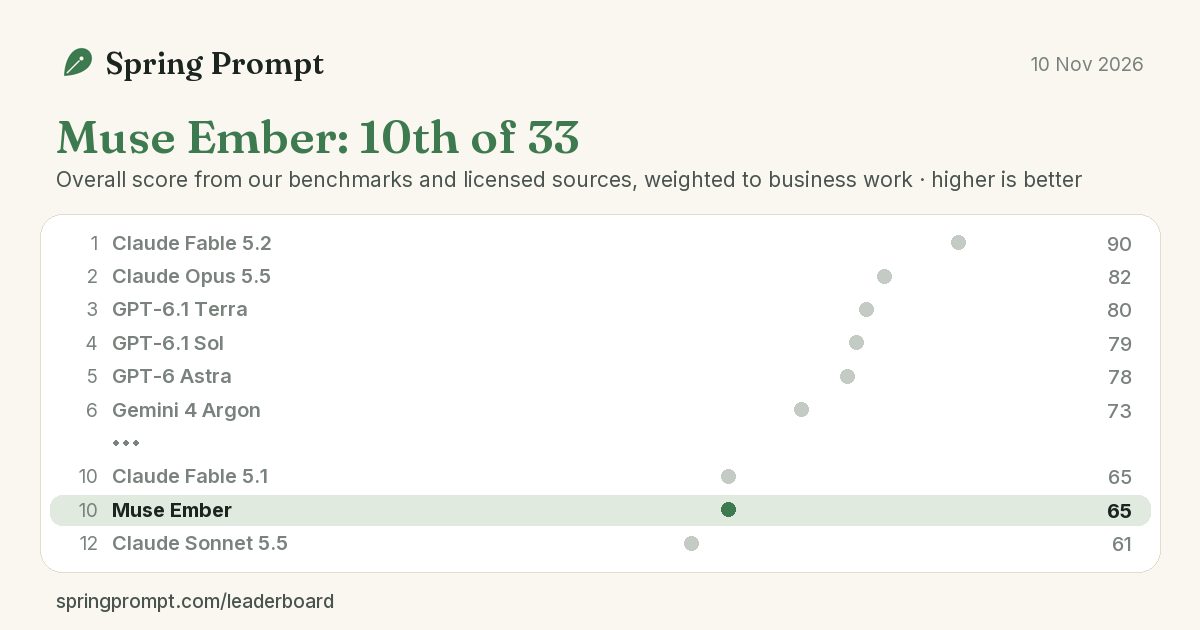
Thinking Machines' Inkling 2 Mini is open weights, small enough to run on a laptop and very cheap on OpenRouter. On our five business benchmarks it came 37th of 40 overall, well behind GPT-6 Luna at about the same price, though it drew a tidy pelican.
 Ellis CrosbyFounder, Spring Prompt
Test Inkling 2 Mini on your prompt → It runs beside the models you could use instead, with every answer checked and costed.
Thinking Machines released Inkling 2 Mini on 20 November, fifteen days after Inkling 2 Small. It's a small mixture-of-experts model with open weights, and the company pitches it as small enough to run on your laptop. OpenRouter listed it the next day at $0.091/$0.362 per million tokens, one of the cheapest models we have run, and it went through our five business benchmarks the same day.
It isn't ready for the work our benchmarks measure. It came 37th of 40 on our overall leaderboard, and GPT-6 Luna, at about the same price, beat it on every benchmark. Where it did well was a drawing: its pelican on a bicycle is one of the cleanest on the page.
Inkling 2 Mini at a glance
- Near the bottom on business work. 37th of 40 overall; 23.2% of its factual product listings were publish-ready in all three runs, and 5.4% of its sales listings.
- Very cheap per task: about $0.0015 a product listing and $0.02 a slide deck or survey task.
- Slow on the route we tested: 41 seconds a listing, 12 minutes a deck and 17 minutes a survey task, through OpenRouter's only provider.
- Open weights, released on Hugging Face and Thinking Machines' Tinker API on 20 November.
- Price: $0.091/$0.362 per million input/output tokens on OpenRouter.
Inkling 2 Mini benchmark results in one table
Independent results, measured by Spring Prompt on 21 November 2026 at the default setting on OpenRouter (no reasoning setting sent). How to read this table: each rank is among the models on sale today that we have run on that benchmark; "at its price" means models under $0.25 per million tokens. All of it is free to reuse with a link (CC BY 4.0), and the full rows are in our open data.
| Taskbenchmark | Inkling 2 Mini | Rankmodels on sale today | Rank at its priceunder $0.25 per million | Best at its price |
|---|---|---|---|---|
| Product listings, factual briefCatalogBench, publish-ready in all three runs | 23.2% | 28th of 36 | 4th of 5 | GPT-6 Luna, 55.4% |
| Product listings, sales briefCatalogBench, publish-ready in all three runs | 5.4% | 25th of 36 | 4th of 5 | GPT-6 Luna, 51.8% |
| Ad budget, 12 simulated monthsROASBench score | 29.9 | 29th of 36 | 4th of 5 | GPT-6 Luna, 53.4 |
| Slide decksDeckBench rating | 792 | 29th of 36 | 5th of 5 (last) | GPT-6 Luna, 1,258 |
| Survey analysisSurveyBench rating | 567 | 26th of 27 | 5th of 5 (last) | Muse Ember, 1,354 |
| Chess, 60 seconds a gameBulletBench | too slow | lost its first four games on time at every setting, so it isn't rated | ||
Products, companies and survey data are invented, and each benchmark except CatalogBench ran once. Ratings are head-to-head scores, where a higher number wins more comparisons.
What Thinking Machines says
Thinking Machines' launch post describes a mixture-of-experts model with 26.4 billion parameters in total and 3.4 billion active per token, built from the same recipe as Inkling 2 Small (594 billion parameters, it says) with two-thirds of its experts pruned. Its announcement pitched it at people who found Small too big. Its middle layers run three times for every token. It takes about 20 GB of memory, and the company says it is small enough to run on a laptop, with support in vLLM, SGLang, Ollama and llama.cpp. The weights are on Hugging Face, and it is on Thinking Machines' Tinker API for inference and fine-tuning.
Inkling 2 Mini benchmarks, measured by Spring Prompt
Product listings: accurate fields, invented claims
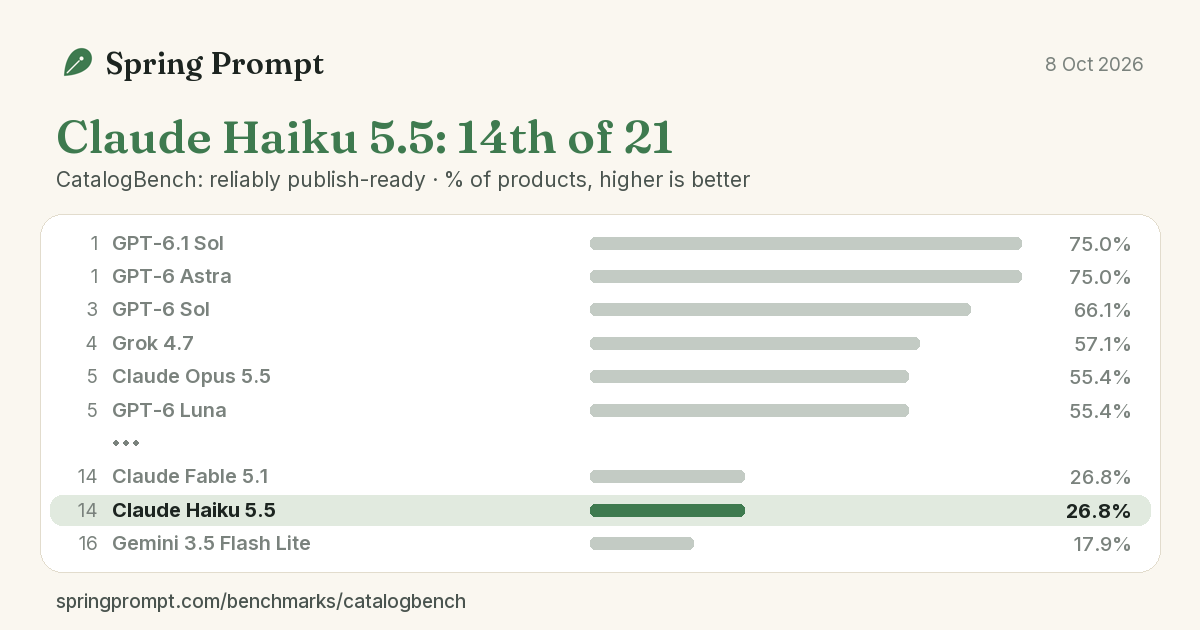
CatalogBench asks for a listing that is ready to publish from a product's supplier data and photos. Inkling 2 Mini got most fields right (93.7% field accuracy) and never overwrote the data it was given, but it added about one unsupported claim per product on the factual brief and two on the sales brief. Claims were the main reason its listings failed: 27% of factual listings and 62% of sales listings. Only 23.2% of its factual listings passed in all three runs, against 55.4% for GPT-6 Luna and 26.8% for Claude Haiku 5.5. Each listing cost about $0.0015 and took 41 seconds.
Ad budgets: cautious, low profit
In ROASBench, twelve simulated months of ad budget decisions, it scored 29.9, 29th of 36. It never overspent, but five of its twelve months lost money, and it made about half the profit of Gemini 4 Hydrogen. That is still ahead of Claude Haiku 5.5 (24.1) and Gemini 3.5 Flash-Lite (25.4).
Slide decks: not presentable
On DeckBench it rated 792, 29th of 36. None of its six public decks could be presented as they came: every one had layout problems, and most also had unsupported claims or a recommendation the data didn't support. Each deck took about 12 minutes.
Survey analysis: good plans, weak conclusions
On SurveyBench it rated 567, 26th of 27. Its survey plans were sound (90 of 100), its numbers were right and it caught 80% of the traps in the data, but none of its analyses held up: each one drew conclusions the data didn't support. Each task took about 17 minutes.
In the playground
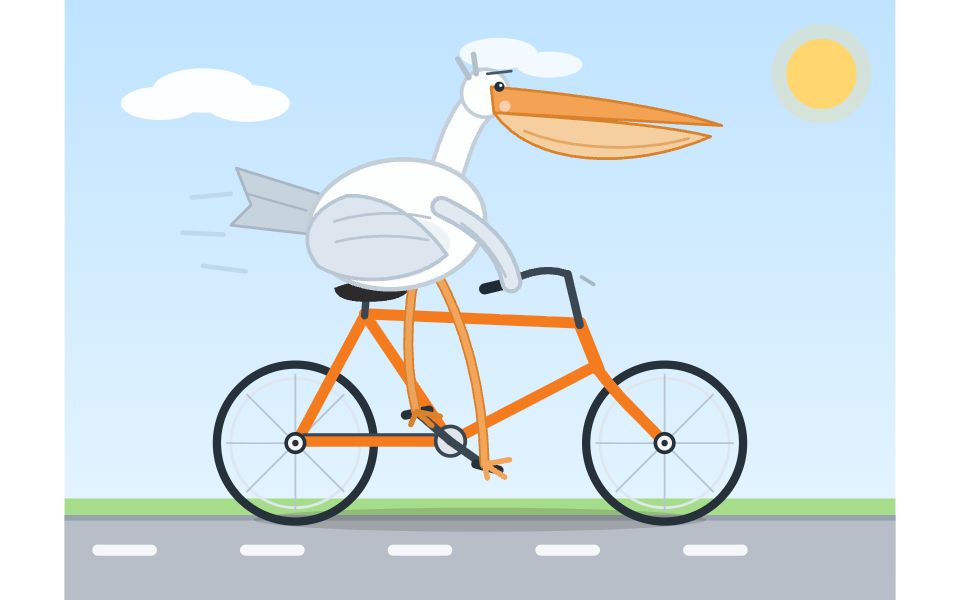
It did better on our two playground prompts, which are one-off examples rather than measurements. Its pelican sits on the saddle with a wing on the handlebars and both feet down to the pedals, on a complete bicycle: one of the cleanest riders on the page. Its stained glass window lights up with rays that follow the pointer, but it skips the drawn cartoon and misspells its own title ("steind glass").
Third-party results
None count towards its rank yet, because the third-party data in our release predates the launch. On 20 November Artificial Analysis reported a score of 20 on its Intelligence Index, describing it as an open-weights looped transformer on its Pareto frontier.
Inkling 2 Mini vs GPT-6 Luna, Claude Haiku 5.5, DeepSeek V4.1 Flash and Gemini 3.5 Flash-Lite
| Modelwhy it's here | Priceper million, in/out | Listingsfactual / sales, reliable | Decksrating | Surveysrating | Ad budgetsscore |
|---|---|---|---|---|---|
| Inkling 2 Minithe new model, open weights | $0.091 / $0.362 | 23.2% / 5.4% | 792 | 567 | 29.9 |
| GPT-6 Lunabest at its price | $0.10 / $0.50 | 55.4% / 51.8% | 1,258 | 1,081 | 53.4 |
| Claude Haiku 5.5same price band | $0.10 / $0.50 | 26.8% / 10.7% | 1,122 | 1,243 | 24.1 |
| DeepSeek V4.1 Flashcheap open-weight alternative | $0.30 / $1.20 | 41.1% / 23.2% | – | – | – |
| Gemini 3.5 Flash-LiteGoogle's cheapest | $0.30 / $2.50 | 17.9% / 3.6% | 609 | 654 | 25.4 |
Measured by Spring Prompt; "–" means we haven't run that model on that benchmark. Prices from OpenRouter, 21 November 2026.
Is Inkling 2 Mini good? Who should use it
- Not for business content or analysis through an API. GPT-6 Luna costs about the same and was ahead on every one of our benchmarks.
- Worth a look if you need open weights on your own hardware, where the speed we saw on OpenRouter won't apply. Check its claims carefully: it invents details.
- Fine-tuning: Thinking Machines offers it on Tinker for customisation, which we haven't tested.
These benchmarks aren't your data. Thinking Machines' own pitch is research and running it locally, which we haven't measured.
What we'll update
We'll add Artificial Analysis, Arena and the other third-party sources as they enter the catalogue, and its rank may change when they do. Until then, the Inkling 2 Mini model page has our results as they stand, and the release tracker shows the Inkling line's launches.
Is a small open model enough for your app? Paste your prompt and we'll draft the cases and checks, run it on Inkling 2 Mini and the alternatives, and show you the cheapest one that passes. Test your prompt →
Cheapest model that passes
On our benchmarks that define a pass for each task: what one passing answer cost in our run, failed attempts included, and whether a cheaper model passed.
- CatalogBench · cost per 1,000 accepted listings
Inkling 2 Mini: $3.16 (79 of 168 attempts), 3 of 28. Cheapest: GPT-6 Luna at $0.70 (114 of 168 attempts). It passed at least as often. - DeckBench · cost per presentable deck
Inkling 2 Mini: no presentable decks (0 of 6 tasks). Cheapest: GPT-6.2 Sol at $0.09 (5 of 6 tasks). - SurveyBench · cost per sound survey task
Inkling 2 Mini: no sound survey tasks (0 of 9 tasks). Cheapest: GPT-6 Luna at $0.03 (3 of 9 tasks).
Cost per attempt divided by the share that passed, at the run date's prices, excluding judging. Each model at its cheapest setting per passing answer. With a handful of tasks, a pass or two either way is within chance. No estimate where a run had missing outputs, because their cost may not have been recorded.
Quick answers
How much does Inkling 2 Mini cost?
On OpenRouter, $0.091 per million input tokens and $0.362 per million output, checked on 21 November 2026. In our runs that came to about $0.0015 a product listing, $0.022 a slide deck and $0.017 a survey task. The weights are open, so you can also run it yourself.
Is Inkling 2 Mini open weights?
Yes. Thinking Machines released the weights on Hugging Face on 20 November 2026, alongside its Tinker API. It says the model runs in about 20 GB of memory, including on a laptop.
How good is Inkling 2 Mini?
On our business benchmarks of 21 November it came 37th of 40 overall. Its best result was factual product listings, 23.2% publish-ready in all three runs (28th of 36). GPT-6 Luna, at about the same price, managed 55.4%.
Is Inkling 2 Mini fast?
Not on the route we tested. Through OpenRouter, where Thinking Machines is the only provider, it took 41 seconds a product listing, about 12 minutes a slide deck and 17 minutes a survey task, and it lost every speed chess game on time.
Inkling 2 Mini or GPT-6 Luna?
For business work through an API, GPT-6 Luna: it costs about the same and was ahead on every one of our benchmarks. Inkling 2 Mini is the one to try if you need open weights you can run on your own hardware.
How big is Inkling 2 Mini?
Thinking Machines says it is a mixture-of-experts model with 26.4 billion parameters in total and 3.4 billion active per token, smaller than Inkling 2 Small, which it released on 5 November.
Release dates: every Thinking Machines model release · new AI models released this week
Will Inkling 2 Mini work for your product?
Benchmarks aren't your task. Paste the prompt your product uses and run it beside the models you could use instead, with every answer checked and costed.
New here? Your email starts a free trial. No credit card needed.