Best AI for Product Descriptions: Accuracy, Cost and Real Examples
Last checked 20 October 2026.
The best AI for product descriptions is the one that produces listings your team can accept at a useful cost. Fluency is only part of the job. A description can read well while naming the wrong pack size, adding an unsupported safety claim or leaving out the detail a shopper needs.
Our CatalogBench results compare models on the same sparse product feeds, photos and supplier copy. They provide a shortlist for a catalogue pipeline. They evaluate the underlying models in our workflow; an app such as Shopify Magic or a PIM's writing assistant adds its own prompts and controls.
Choosing a model for your product feed? Our catalogue feed diagnostic compares configurations on your own products and records what reviewers would accept, edit or reject. Discuss your catalogue →
A starting shortlist, with the trade-offs visible
In the results available on 20 October 2026, GPT-6.1 Sol and GPT-6 Astra both made 75% of the public products publish-ready in every repeat under the factual brief. GPT-6 Luna was much cheaper to run, with a lower acceptance rate. Those are different choices, depending on the failure rate and review work your application can tolerate.
| Model, provider default | Reliable, factual brief | Reliable, sales brief | Generation per 10,000 listings |
|---|---|---|---|
| GPT-6.1 Sol | 75.0% | 67.86% | $83.84 |
| GPT-6 Astra | 75.0% | 69.64% | $371.20 |
| GPT-6 Luna | 55.36% | 51.79% | $4.77 |
Publication snapshot: catalogue release 2026-10-20-96eb40c3ec63. These three configurations were run on 30 September 2026: 56 public, invented products, three repeats each. “Reliable” means the listing passed in all three repeats. Cost is the recorded factual-brief generation cost scaled to 10,000 attempts at the run's prices; it excludes judging and human review. Small score differences do not establish a dependable winner. For current results, see the live CatalogBench standings.
What should a product-description benchmark check?
A listing passes our checks only when it is complete enough to publish: supported attributes, the correct product and variant, required facts, acceptable formatting and category, and no material unsupported claim. We also check whether the search-facing copy contains the details needed to find it. The full method explains the deterministic rules and the model judge.
Read the ordinary pass rate alongside the reliable rate. The ordinary rate counts accepted outputs across attempts. The reliable rate asks which products passed every repeat. A pipeline that runs once and reviews the answer has a different decision from one expected to behave consistently without an editor.
A description that sounds right and names the wrong product
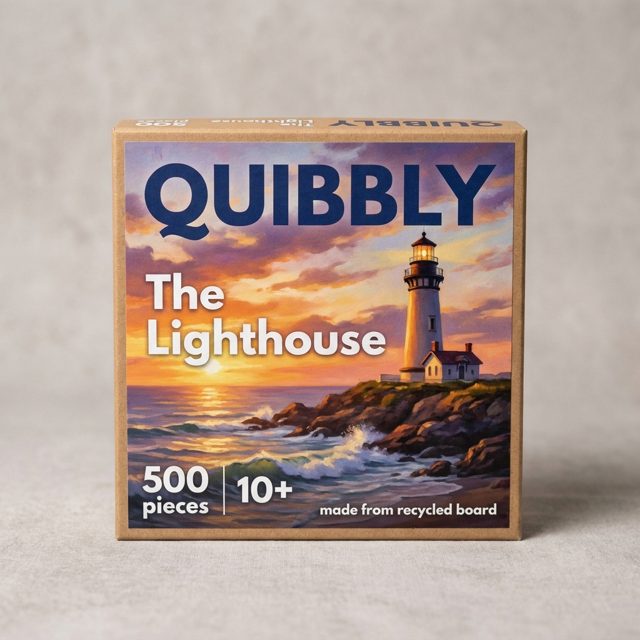
Our invented Quibbly puzzle is a useful example. The supplier copy says 1,000 pieces, while the photographed pack says 500. In a stored sales-brief output, Gemini 3.5 Flash Lite used the title Quibbly The Lighthouse Jigsaw Puzzle 1000 Pieces
. GPT-6 Astra's displayed output used 500 pieces.
The important check is the conflict with the pack. A spelling checker or a general “is this persuasive?” score would not establish the right piece count. See the actual outputs and other checks; these individual examples illustrate failures rather than rank a model on their own.
Test the brief your team will actually use
CatalogBench runs a strict factual brief and a sales brief asking for compelling copy. The same model can behave differently under those instructions. In the publication snapshot, Gemini 4 Argon went from 60.71% reliably publish-ready under the factual brief to 17.86% under the sales brief, on the 56 public products with three repeats. That configuration was tested on 13 October 2026.
Use your real instructions in an evaluation, including brand voice and supplier copy. Include cases where the feed and image disagree, plausible but unsupported claims, small print and variants that differ by one important attribute. Check whether a revised prompt helps on a held-out set; a successful rewrite of one example is not evidence of a general improvement.
Compare cost against accepted work
A cheap attempt can still create an expensive review queue. CatalogBench now shows estimated generation cost per accepted listing, using recorded cost and the ordinary pass rate for the same configuration and run. A configuration with no accepted outputs has no finite estimate. We also withhold an estimate where failed calls leave the cost record incomplete.
This is a comparison of the test runs, not a quote for operating your shop. Judge calls, reviewer time, integration costs and current API pricing still matter. We do not infer that repeated retries will eventually fix a product a model consistently gets wrong.
Make the final choice on your own catalogue
- Build a representative sample. Include your main categories and the cases reviewers find difficult. Keep some products out of prompt development.
- Record the truth. Agree which feed fields and images support each fact, what is unknown, and what would stop a listing going live.
- Run the current setup and alternatives. Keep inputs and acceptance criteria fixed. Repeat enough cases to expose inconsistent behaviour.
- Check the evaluator. Compare its verdicts with a catalogue reviewer. Investigate disagreements before trusting an acceptance-rate claim.
- Decide with the failure examples. Report critical errors, accepted listings and measured cost together. Keep confirmed failures as regression cases.
Our guide to testing AI hallucinations develops the source-of-truth checks. For a comparison on your own data, see the catalogue feed diagnostic or tell us what you are deciding.
Quick answers
What is the best AI for writing product descriptions?
Compare models on whether their listings are factually supported, complete and ready to publish. CatalogBench provides a starting shortlist using the same public products and checks for each model. Test that shortlist on your own catalogue before choosing.
Does CatalogBench compare Shopify Magic, Jasper or other writing apps?
No. It compares underlying AI models in the same product-listing workflow. A writing app's prompts, integrations and review controls can change the result and need their own evaluation.
Can AI write a product description from an image?
Models can extract visible details, but a photo cannot establish every specification, certification or safety claim. The test is whether the model preserves supported facts, leaves unknowns alone and flags conflicts with the feed.
Does a better CatalogBench result mean more sales?
No. CatalogBench measures listing accuracy, completeness, channel rules and findability on invented test products. Conversion and revenue effects require separate evidence from the shop.
Model pages: GPT-6.1 Sol · GPT-6 Astra · GPT-6 Luna