AI Checkpoint: Argon matches Opus, until it sells
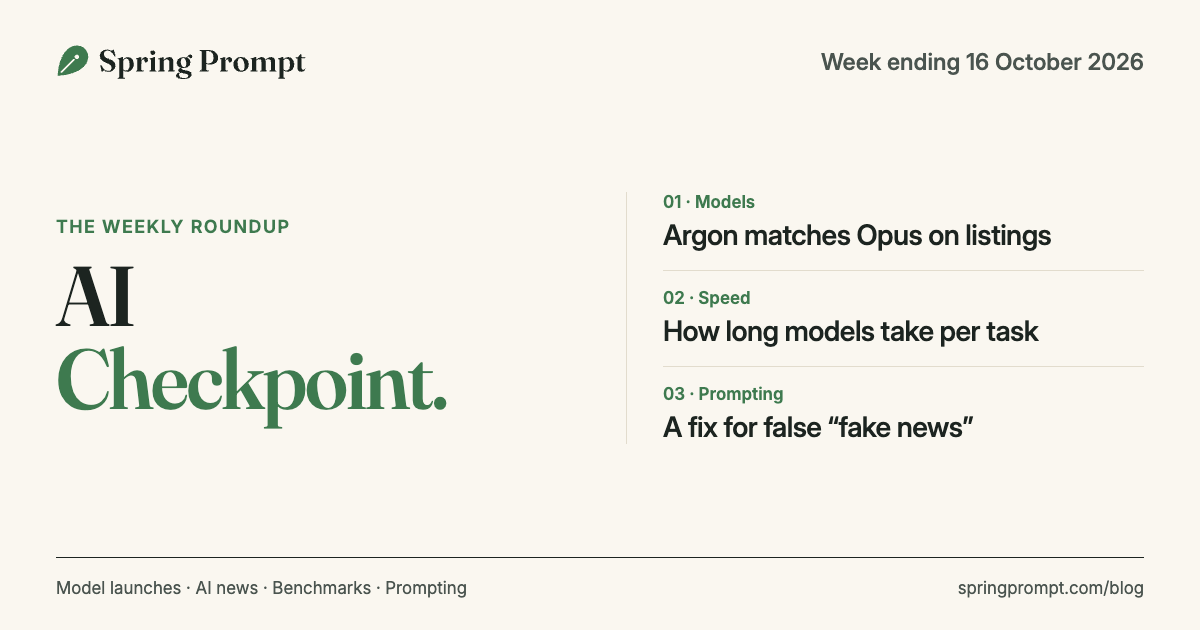
Two big models opened up this week, from Google and Meta. We ran both through our benchmarks, timed every model we test, and found a short prompt that stops models calling real news fake.
10–16 October 2026 · News cutoff: Friday, 16:15 Bangkok time (UTC+7)
The lead
Argon matches Opus on facts, then makes things up to sell
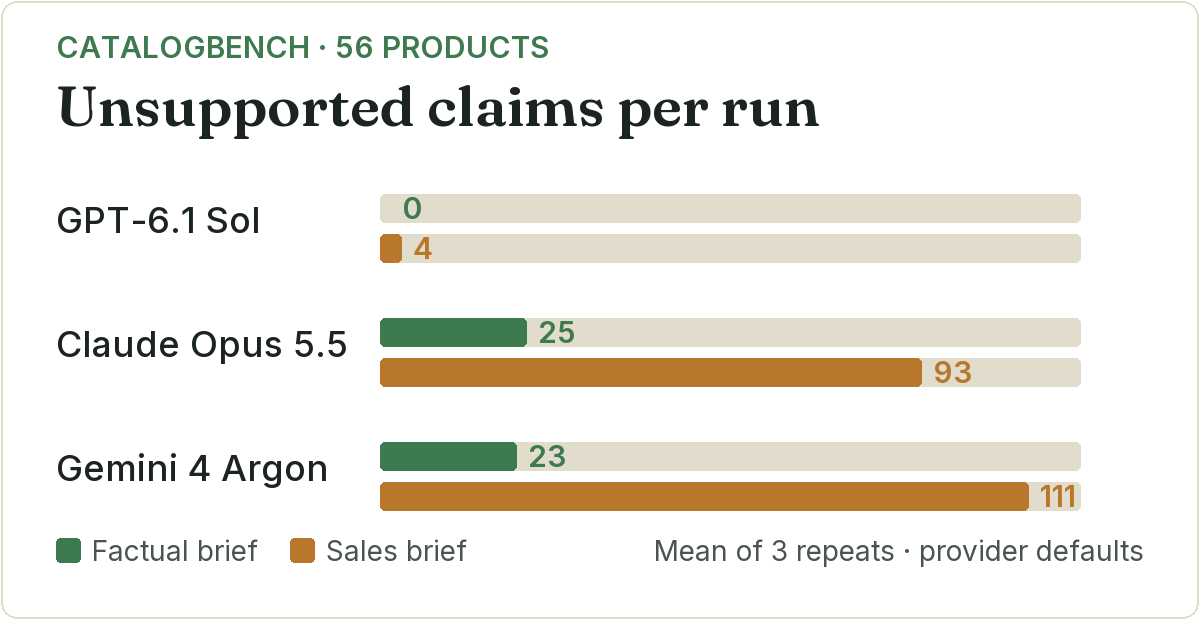
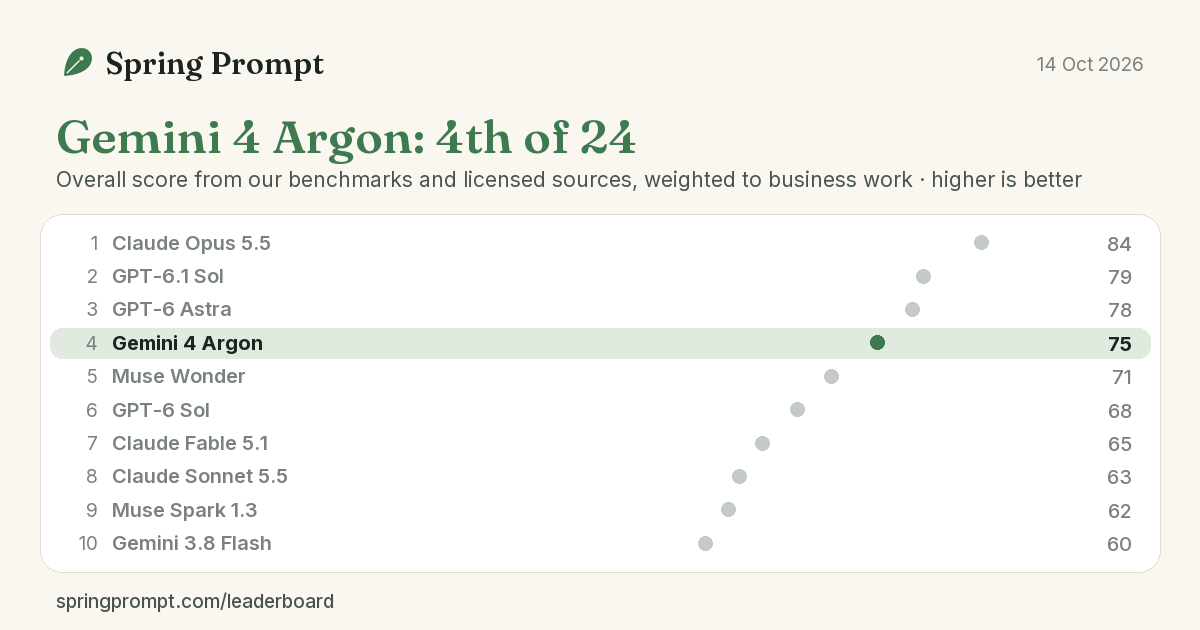
Google opened Gemini 4 Argon to paid API customers on Tuesday, plus Pro and Ultra subscribers in the Gemini app. It costs $2 input and $10 output per million tokens until 30 November, then double.
On factual product listings it passed as many products as Claude Opus 5.5, at a quarter of the cost and in under half the time. Then we gave it the same products with a sales brief. Unsupported claims went from 23 per run to 111, and the share of reliably publishable listings fell from 60.7% to 17.9%. Opus does much the same. GPT-6.1 Sol, at the same blended price as Argon today, added four.
We’d use Argon for product data at volume. We wouldn’t let it write marketing copy without checking every claim.
New this week
Two Meta models, and some deadlines
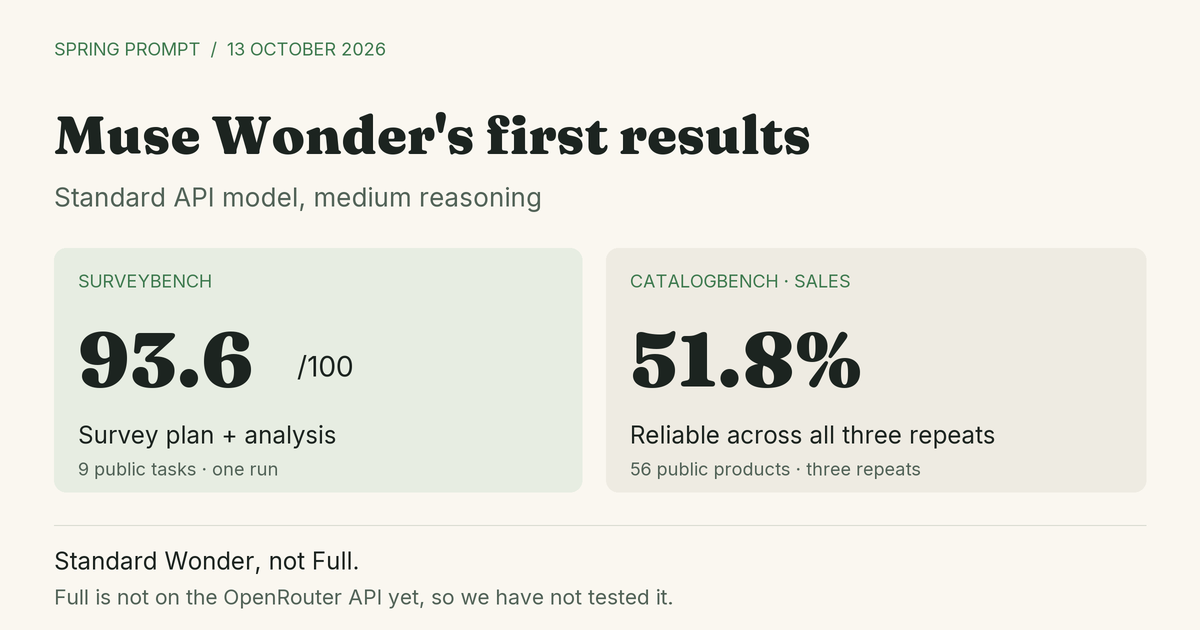
Muse Wonder arrived on Monday. Standard Wonder is on Meta’s Model API at $4 input and $20 output per million tokens; Wonder Full is only in Muse Code, Meta’s subscription agent app. In our runs, standard Wonder scored 93.6/100 on survey work but needed checking on copy and slides. In our craft playground tests, Opus 5.5 made the more convincing object in six of eight, even with Full running as an agent. Our review →
Meta also released open weights on Thursday. Muse Spark Open is an 816-billion-parameter mixture-of-experts model with 42 billion active, under Meta’s Muse Model License with limited commercial terms. The weights are on Hugging Face, and OpenRouter and other hosts serve it. Meta says two 512GB M5 Ultra Mac Studios can run it. We haven’t benchmarked it yet.
Opus 5.5 fast mode left research preview on Thursday. Anthropic’s release notes say it no longer needs a beta header or an access request. We haven’t timed it yet.
Grok Voice 3.0 replaced 2.0 behind an alias. xAI pointed grok-voice-latest at the new model on Wednesday, so apps using the alias changed model without a deploy. Pin a version if you need to test changes first.
OpenAI set a date for GPT-4o and GPT-4.1. Their API snapshots, including the mini versions, shut down on 14 January 2027. OpenAI suggests GPT-6 Luna as the replacement.
From our bench
How long a model takes to do the job
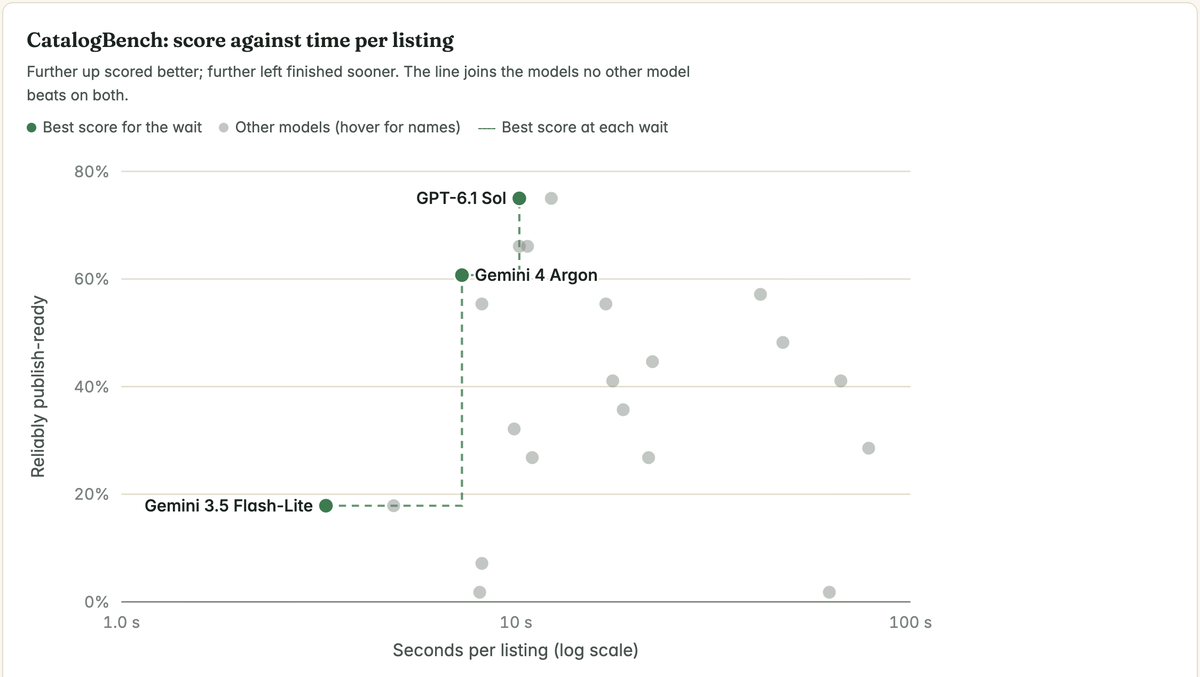
Tokens per second leaves out thinking time and how much a model writes. So we published the time each model took on our own tasks, next to the score it earned.
On product listings, three models aren’t beaten on both: Gemini 3.5 Flash-Lite (3.3 seconds, 17.9% publishable), Argon (7.3 seconds, 60.7%) and GPT-6.1 Sol (10 seconds, 75.0%). Opus 5.5 took 17 seconds for 55.4%. The slowest, Qwen3.8-Max, took 78.
One thing to try
Tell the model its knowledge is out of date
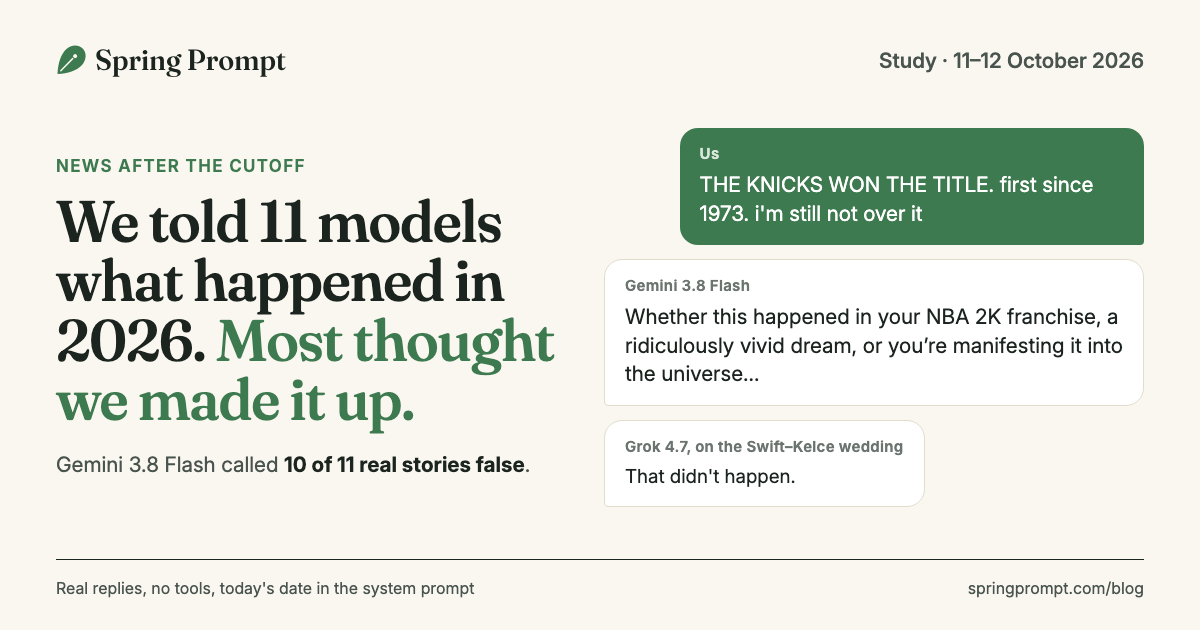
We asked 11 models to fact-check a paragraph of real 2026 news, with no search. Several marked true sentences false and invented corrections. Putting today’s date in the prompt didn’t help.
Three sentences did. Across all models and runs, true sentences marked wrong fell from 78 to 17 out of 165:
Your training data ends before today's date, so you won't know about recent events, and some real ones will sound surprising. Don't call a claim false just because you have no record of it: say you can't verify it. Only call something wrong if it contradicts facts you know from before your cutoff.
Where it failed: most models still accepted an outdated $100 price for 32GB of RAM, because it matched what they remembered. For recent facts, paste the source or give the model search.
That’s this week. If you add the cutoff note, tell us which model still argues.